Clarksville's humidity is relentless, and your garage door hardware feels every bit of it. Springs, cables, rollers, and hinges are all bare or thinly coated steel, and a damp garage is a slow-motion corrosion chamber. The fix isn't complicated, but it is consistent: a twice-yearly routine that takes about fifteen minutes.
The short answer
Humidity plus bare steel equals rust, and Middle Tennessee has humidity to spare. Inspect, clean, and lubricate your door's hardware twice a year with a silicone-based lubricant, keep the bottom weather seal tight, and improve garage airflow if it stays damp. That routine keeps springs, cables, and rollers alive years longer than neglect does.
Why Clarksville doors rust faster
Our summers sit heavy with humidity, and garages trap it. The Cumberland and Red rivers add valley moisture, and spring and fall bring condensation: cool metal, warm damp air, and water beading right on the springs and tracks. An unconditioned garage, which is most of them, swings through all of it with no relief. Steel hardware in that environment doesn't stand a chance without maintenance. It's the same reason we see rusty rollers grinding in August and pitted springs snapping in January; the rust starts in summer and the cold finishes the job.
Where rust hits first
- Lift cables. The most safety-critical spot. Cables are thin braided steel, and rust eats them fast. Fraying or orange dust near the drums means act now.
- Torsion springs. Pitting creates weak points in the coil. A pitted spring is a spring planning its exit, usually during the first cold snap.
- Roller stems and hinges. Rust here means grinding noises and jerky movement long before anything breaks.
- Bottom brackets and fasteners. They sit closest to ground moisture and go first cosmetically. Ugly, but also a warning.
A simple prevention routine
- Look everything over twice a year. Spring and fall. Check cables for fraying, springs for pitting, rollers for cracks, and the bottom seal for gaps.
- Clean before you lubricate. Wipe down the hardware and clear track debris. Lubricant over dirt just makes grinding paste.
- Lubricate the moving steel. Silicone-based garage door lubricant on springs, hinges, rollers, and bearing plates. Light coat, wipe the excess.
- Check the weather seal. A tight bottom seal keeps ground moisture and pests out. If daylight shows through, replace it.
- Air the garage out. If yours stays damp for days after rain, crack it open when you can or consider ventilation. Dry air is free rust prevention.
What not to do
- Don't rely on WD-40. It's a moisture displacer, not a lasting protectant. Fine for freeing something stuck; useless as a rust plan.
- Don't paint over rust on springs. Paint hides developing cracks and flakes into the coils, where it binds and grinds. Lubrication is the right protection for springs.
- Don't ignore orange dust. That fine rust powder under the spring or near the cables is an early warning. It only gets worse.
When rust means replacement, not maintenance
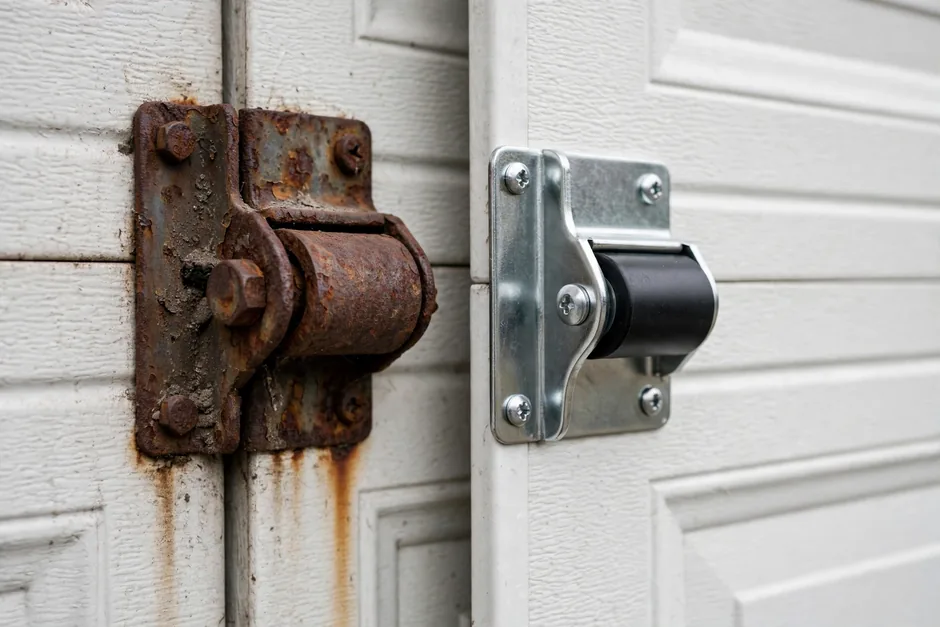
Surface rust on hinges and brackets can be cleaned and managed. But some rust is a retirement notice. Cables with visible fraying or pitting should be replaced immediately; a cable failure drops the door without warning, and our cable repair service exists for exactly this. A torsion spring with flaking coating and visible pitting is living on borrowed time; plan the replacement before January does it for you. Rollers with rust-frozen bearings get our roller replacement treatment: sealed nylon rollers that shrug off humidity far better than old steel ones.
Related reading
- Garage door maintenance checklist: the full seasonal routine for Clarksville homes.
- Garage door cable repair: when rust has gone too far on cables.
- How long do garage door springs last?: rust's role in spring lifespan.
Homes near the Cumberland River in New Providence see the worst of the moisture, but the routine helps everywhere Clarksville Garage Door Rescue serves. For manufacturer care guidance, Clopay publishes solid homeowner material on keeping doors and hardware in shape.