Every January, the same thing happens across Clarksville: the temperature drops hard overnight, and by morning our phones are ringing with broken springs. Cold doesn't damage a healthy new spring, but it finishes off one that was already near the end. Here's why it happens and what to do about it.
The short answer
Cold makes spring steel contract and more brittle, while lubricant thickens and the door gets harder to move. A spring already near the end of its cycle life, which is most springs over seven years old, snaps when that first hard freeze hits. January is our busiest month for spring calls in Montgomery County, and the pattern repeats every year.
Why January is our busiest month for springs
The call we get most after a January cold snap starts the same way: "It was fine last night, and this morning there was a loud bang." Middle Tennessee doesn't stay cold for long, which is exactly the problem. Springs expand and contract through repeated freeze-thaw cycles, and each cycle adds stress to steel that's already fatigued from years of lifting a 150-plus-pound door. Add a garage that isn't heated, which describes most garages in Clarksville, and the spring takes the full brunt of every cold night.
Torsion vs extension springs in the cold
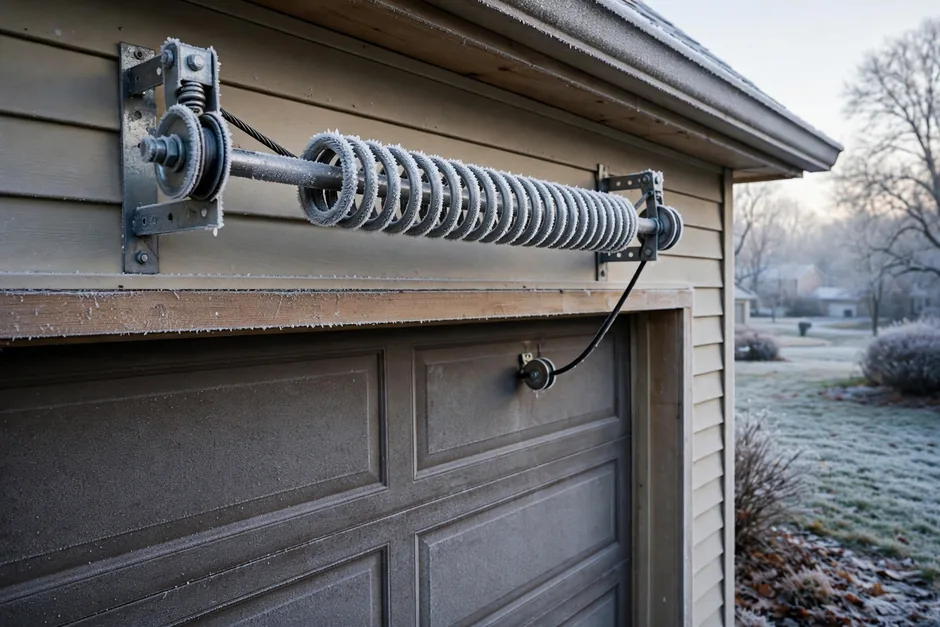
Most modern doors use a torsion spring mounted on a shaft above the door. It twists to store energy and usually fails with a single loud bang. Older doors often use extension springs that stretch along both sides of the tracks; they tend to fail less dramatically but are more exposed to the cold air. Both types lose life faster in freezing weather. Extension springs should always have safety cables running through them, so a break doesn't turn the spring into a projectile. If yours don't, mention it when you call.
Warning signs your spring is about to go
- The door feels heavier. If lifting it manually takes noticeably more effort than it used to, the springs are weakening.
- The opener strains. A healthy opener shouldn't sound like it's working hard. Grinding or hesitation means it's compensating for dying springs.
- Visible gaps in the coil. Look at the torsion spring above the door. A stretched-out gap between coils means it's lost tension.
- Rust on the spring. Our humid summers pit the steel, and pitting creates weak points that cold finishes off.
- The door opens a few inches, then stops. The opener's force settings are fighting springs that can't do their share.
What to do when a spring breaks
- Don't keep hitting the opener button. You'll strip the opener's gears or burn out the motor.
- Don't try to lift the door alone. Without spring assistance you're holding the door's full weight, often 150 to 200 pounds or more. A falling door can cause serious injury.
- Keep the area clear. If the door is stuck open, don't leave it unattended any longer than you must.
- Call a pro. Spring replacement is the most common repair we do, and most visits take under an hour.
Can you prevent cold-weather breakage?
Honestly, only partly. Keeping springs lubricated with a silicone-based lubricant reduces friction and fights the rust that weakens steel, and it's worth doing every fall before the cold arrives. But lubrication can't reverse metal fatigue. Springs are wear parts with a cycle life, usually around 10,000 opens. If yours are seven or more years old, proactive replacement in the fall beats a 6 a.m. surprise in January, and it costs the same either way. Our spring replacement service installs matched pairs so the door stays balanced, and if you're stuck outside business hours, our emergency service covers doors that won't budge.
Related reading
- Broken garage door spring replacement: what the repair involves.
- How long do garage door springs last?: cycle life and replacement timing.
- Garage door maintenance checklist: the fall routine that prevents winter surprises.
For industry background on door hardware and safety, the Door & Access Systems Manufacturers Association is the manufacturers' association, and Clarksville Garage Door Rescue handles spring work across Madison Street and all of Montgomery County.