A noisy garage door is trying to tell you something, and learning the language saves money. Grinding usually means rollers or track trouble, squeaking means dry hinges, banging often means spring trouble, and rattling usually means something's loose. Here's how to decode each one and what to do about it.
The short answer
Most garage door noises come from wear, not catastrophe. Grinding or scraping points to worn or rusty rollers and dirty tracks. Squeaking points to dry hinges that need lubrication. A loud bang or popping points to the torsion spring, which deserves immediate attention. Rattling points to loose hardware or a vibrating opener. Start with the simple checks below; stop and call a pro if springs or cables are involved.
Grinding or scraping
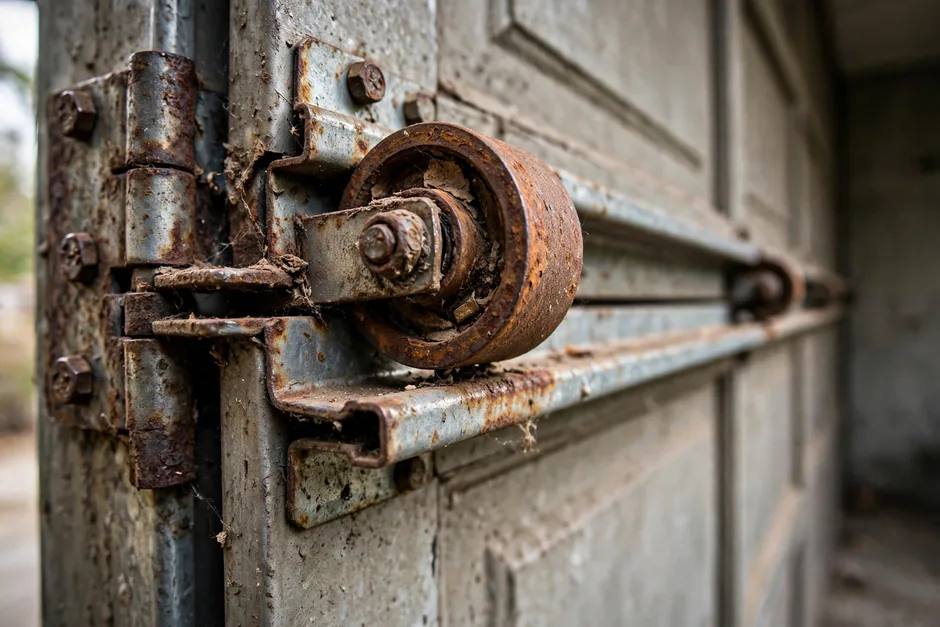
This is the most common complaint we hear, and the cause is usually the rollers. Steel rollers wear flat over time, and in Middle Tennessee's humid summers they rust, too. A rusty roller doesn't roll, it drags, and that drag is the grinding you hear. Debris in the track, a bent track section, or a roller that's cracked can sound the same. If lubrication quiets it for a day and the noise comes back, the rollers are worn and need replacing, not more spray. Our roller replacement service swaps in sealed nylon rollers that run far quieter than old steel ones.
Squeaking or squealing
Squeaking is almost always dry metal-on-metal: hinges, roller stems, or the spring coils rubbing. It's the easiest noise to fix and the best early warning you'll get. A proper silicone-based garage door lubricant on the hinges, rollers, and springs usually silences it. If the squeak persists after lubrication, look closer, something may be binding or wearing through.
Banging or popping
Take this one seriously. A single loud bang, often in the morning, is the classic sound of a torsion spring breaking. Repeated popping as the door moves can mean a spring coil binding or a panel shifting. If you heard a bang and the door now feels heavy or won't open, don't keep running the opener. You likely need spring replacement, and that's a job for a pro, not a Saturday project.
Rattling or vibrating
Rattling usually means loose nuts and bolts on the track brackets or door sections, or an opener that's vibrating against its mounting. Chain-drive openers also develop slack over time, which adds a slapping rattle. Tightening visible track hardware (not the spring bracket bolts, which are under tension) and checking the opener's mounting usually settles it. If the rattle is coming from inside the opener itself, our opener repair service can diagnose worn gears before they strip completely.
What you can safely try yourself
- Lubricate the moving parts. Use a silicone-based garage door lubricant on hinges, rollers, springs, and the opener's chain or screw. Wipe off the excess.
- Tighten what's loose. Snug up track bracket bolts and door section hardware with a socket wrench. Skip anything painted red or attached to the spring assembly.
- Clear the tracks. Wipe out dirt and debris from the track channels so rollers have a clean path.
- Check the opener. Make sure it's mounted solidly and the chain or belt has proper tension per the manual.
Skip the WD-40 as a long-term fix. It's a solvent, not a lubricant. It'll quiet things for a day or two, then the noise comes right back.
| Noise | Likely cause | DIY or pro |
|---|---|---|
| Grinding | Worn or rusty rollers | Lubricate first; replace if it returns |
| Squeaking | Dry hinges | DIY lubrication |
| Bang or pop | Spring issue | Call a pro |
| Rattling | Loose hardware | DIY tightening |
Related reading
- Garage door roller replacement: the fix for most grinding doors.
- Broken garage door spring replacement: for bangs and popping sounds.
- How long do garage door springs last?: knowing when yours are due.
Clarksville Garage Door Rescue quiets noisy doors across Clarksville, from Sango to Woodlawn, and Clopay has solid homeowner guidance on routine door care if you want to dig deeper.